US Involvement in Iran Conflict: 'Defensive Operation' or Threat?
The Middle East simmers on the precipice of wider conflict, with the recent escalation between Israel and Iran drawing the United States into a complex web of military actions and political justifications. What began as a series of retaliatory strikes has quickly widened, raising critical questions about the nature of US involvement: is it a necessary 'defensive operation' to protect allies and assets, or does it represent a dangerous expansion of an already volatile situation, potentially drawing Washington into a deeper, more protracted war? The global community watches closely as the implications of this renewed Israel Iran Angriff unfold, weighing the rhetoric against the mounting casualties and regional instability.
The Expanding Battlefield: A Regional Crisis Unfolds
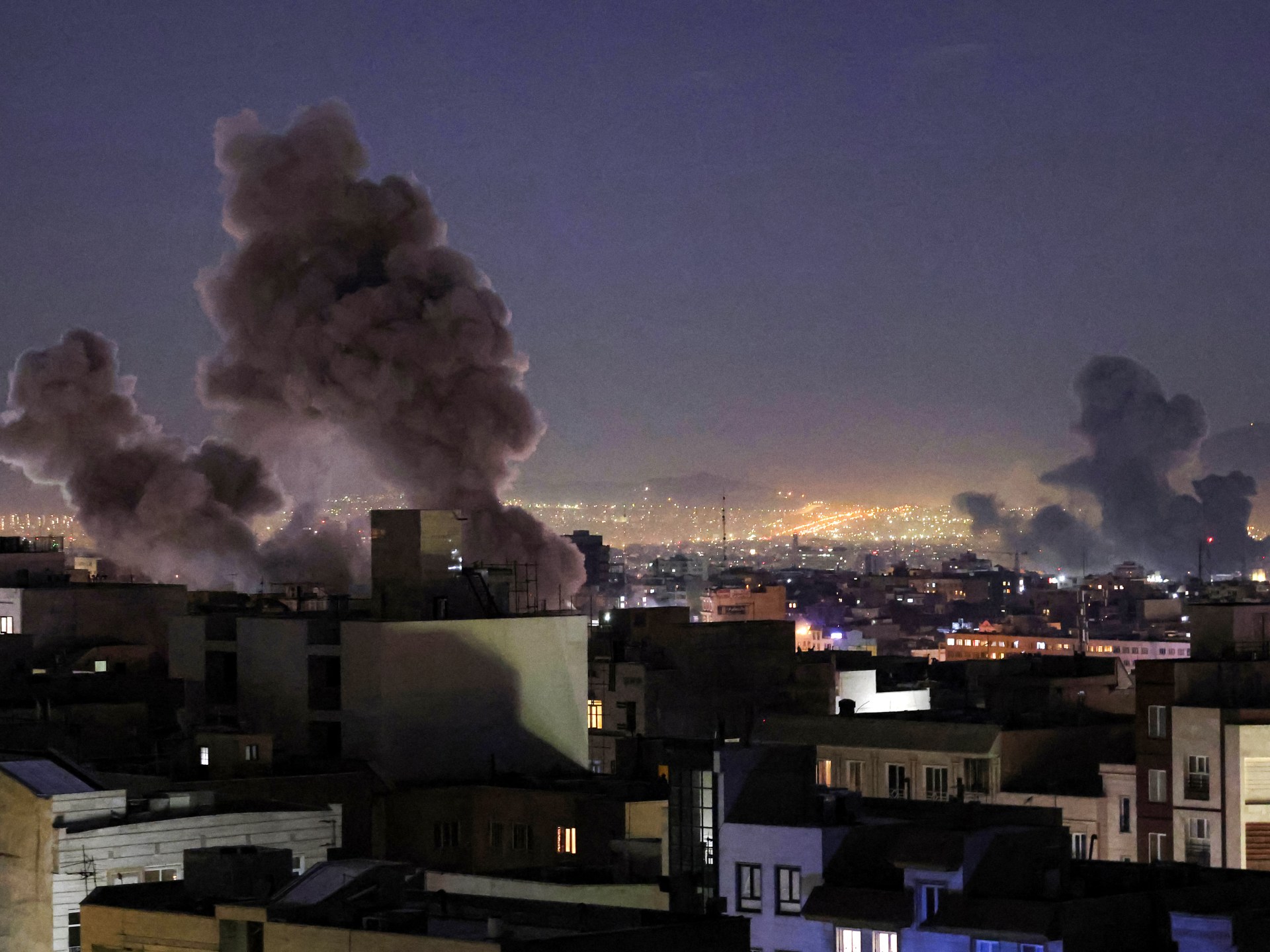
The latest phase of hostilities has seen a dramatic intensification of military exchanges across the region. Iran and its extensive network of proxies, including Hezbollah, have launched missile salvos targeting Israel and several Arab states. Disturbingly, reports indicate that the U.S. Embassy compound in Kuwait was among the sites hit, underscoring the broad and indiscriminate nature of these attacks. In response, a formidable counter-campaign has been unleashed, with Israel and the United States jointly striking targets deep within Iran, signaling a significant escalation from previous shadow wars to overt confrontation. The sheer scale of these operations marks a perilous new chapter, threatening to engulf more nations in direct conflict.
Adding to the chaos, a distressing incident saw three American F-15E Strike Eagles mistakenly shot down by Kuwaiti forces during a combat mission. This event highlights the inherent dangers and potential for tragic miscalculation in such a high-stakes environment, where rapid-fire decisions and complex airspaces can lead to unforeseen consequences.
Escalation and Initial Strikes
The cycle of violence began with a flurry of attacks, most notably Hezbollah's missile and drone strikes on northern Israel. These actions, which Hezbollah later described as a "reaction to the aggression" and a "legitimate right" to confrontation, immediately triggered robust Israeli countermeasures. Beirut's southern suburbs and southern Lebanon bore the brunt of these retaliatory airstrikes. One particularly prominent target was a building in Beirut housing the Al-Manar channel studios, which the Israeli military stated was a "Hezbollah command center" and "weapons storage facility." Such strikes, regardless of the stated intent, carry significant risks of civilian casualties and further regional destabilization.
For more detailed information on the evolving military engagements, consider reading: US-Israel Conflict Widens: Attacks, Casualties, and Regional Impact.
The Human Cost: Casualties Mount
The human toll of this escalating conflict is a grim reminder of its severe implications. Reports from the Iranian Red Crescent Society indicate that over 555 people have been killed in Iran alone by the joint U.S.-Israeli campaign, with more than 130 cities across the country coming under attack. On the Israeli side, authorities have confirmed 11 fatalities. Lebanon, caught in the crossfire and often serving as a battleground for proxy conflicts, has suffered significantly, with an initial 31 deaths reported, escalating to at least 52 people killed and 154 wounded in specific incidents following Israeli airstrikes. Furthermore, the United States has also paid a price, with 18 American service members seriously wounded, a figure that has steadily climbed as the operations intensify. This rising death toll underscores the profound humanitarian crisis unfolding alongside the geopolitical one. To understand the full scope of this tragic impact, refer to: Iran, Israel, Lebanon: Analyzing the Rising Death Toll and Escalation.
US Justification: A 'Defensive Operation' or Preemptive Strike?
The crux of the international debate centers on Washington's rationale for its direct military engagement. Republican Speaker Mike Johnson has vocally defended the U.S. actions, labeling them a "defensive operation." His argument hinges on the assertion that Israel was resolute in its decision to act against Iran, irrespective of American support. According to Johnson, former President Trump faced an incredibly difficult choice but ultimately determined that Iran would undoubtedly retaliate against American personnel and assets if Israel acted alone. Therefore, the U.S. intervention was framed as a preemptive measure to mitigate broader risks to American interests and protect an key ally.
Republican Stance: Protecting Israel, Anticipating Retaliation
The Republican perspective emphasizes the strategic necessity of supporting Israel's security. Proponents argue that Iran's long history of destabilizing regional actions, coupled with its advanced missile capabilities and extensive network of proxy militias, posed an unacceptable threat. From this viewpoint, American involvement is not an offensive act but a strategic intervention designed to deter further Iranian aggression and prevent an even larger regional conflagration. The argument is that by joining the strikes, the U.S. is not only defending Israel but also its own strategic interests and personnel who would inevitably become targets in an unconstrained conflict. This 'defensive operation' narrative seeks to frame the U.S. role as one of responsibility and protection within a volatile region, rather than one of aggressive expansion.
Democratic Opposition: Questioning Imminence and US Threat
In stark contrast, leading Democrats have expressed serious doubts about the administration's justifications. Senator Mark Warner, a prominent voice on the Intelligence Committee, explicitly stated that there was "no imminent threat to the United States of America by the Iranians," acknowledging instead that "there was a threat to Israel." This distinction is crucial, as it challenges the legal and ethical basis for direct U.S. military action under international law, which typically requires an imminent threat to national security or the defense of a treaty ally under attack. Senator Chuck Schumer echoed these concerns, finding a classified briefing on the matter "completely and totally insufficient," suggesting a lack of transparency and convincing evidence to support the administration's claims. This internal political division highlights the deep skepticism regarding the true purpose and scope of the U.S. military operations, raising questions about whether the U.S. is being drawn into a conflict primarily driven by Israeli security concerns rather than direct threats to American sovereignty or citizens.
Fact Check Tip: When evaluating claims of "imminent threat," it's vital to consider the source and the criteria used. International law generally requires a clear, unambiguous, and immediate danger, not just a potential future risk. Different administrations and political factions often interpret this threshold differently.
Beyond the Rhetoric: Geopolitical Implications and Future Outlook
The ongoing Israel Iran Angriff scenario carries far-reaching geopolitical implications that extend well beyond the immediate combat zones. The direct involvement of the United States significantly alters the regional power dynamics, potentially emboldening some actors while further isolating others. The long-term stability of the Middle East hinges on how this conflict evolves, and whether diplomatic off-ramps can be found amid the escalating violence.
Regional Stability and Hezbollah's Role
Hezbollah's assertion that "confrontation is a legitimate right" following Israeli strikes underscores the group's unwavering commitment to its armed struggle and its role as a critical Iranian proxy. This dynamic ensures that any conflict between Israel and Iran will inevitably draw in Lebanon, with devastating consequences for its already fragile state. The continued engagement of Iranian-backed militias across the region complicates efforts to de-escalate, creating a multi-front conflict that defies easy resolution. The potential for these groups to widen their attacks, or for other regional actors to be pulled in, remains a constant and grave concern. The strategic calculations of each party in this renewed Israel Iran Angriff are complex, often involving intricate layers of deterrence, retaliation, and grander geopolitical ambitions.
The Path Ahead: Funding and Leadership Shifts
The financial implications of prolonged U.S. involvement are significant. It is widely expected that the Trump administration will seek supplemental funds from Congress to cover the mounting costs of the operation. This will undoubtedly spark further debate and scrutiny in Washington, as lawmakers weigh the financial burden against the perceived strategic necessity. Economically, prolonged conflict can lead to soaring oil prices, disruptions in global supply chains, and significant aid burdens for humanitarian efforts.
Compounding the uncertainty is the internal political situation within Iran. Recent remarks by cleric Alireza Arafi, a member of Iran's temporary leadership council, expressing hope for a "quickly" appointed new supreme leader to replace Ali Khamenei, suggest potential shifts at the highest echelons of Iranian power. A leadership transition in Tehran, especially during a period of intense external conflict, could either open avenues for de-escalation or lead to even more hardline policies, further complicating the trajectory of the Israel Iran Angriff and the wider regional crisis. The future direction of Iran's foreign policy and its relationship with regional adversaries and international powers remains highly unpredictable.
Actionable Advice: For a comprehensive understanding of the crisis, monitor official statements from the U.S. Department of Defense, the Israeli Prime Minister's Office, and Iran's Foreign Ministry. Cross-referencing these sources with reputable international news organizations can provide a more balanced perspective on events and justifications.
Conclusion
The U.S. involvement in the Israel-Iran conflict is a multifaceted and deeply contentious issue. While framed by some as a necessary 'defensive operation' to protect Israeli security and prevent broader regional instability, others view it as an unnecessary escalation that risks entangling the United States in a prolonged and costly war without a clear, imminent threat to its own national security. The tragic casualty counts, the political divisions in Washington, and the unpredictable geopolitical currents underscore the immense challenges ahead. As the conflict continues to widen, the international community, policymakers, and citizens alike must critically analyze the justifications, anticipate the far-reaching consequences, and demand transparency regarding the true costs and objectives of this perilous engagement. The path forward demands careful diplomacy, a clear understanding of all involved parties' motives, and a determined effort to prevent further loss of life and regional destabilization.